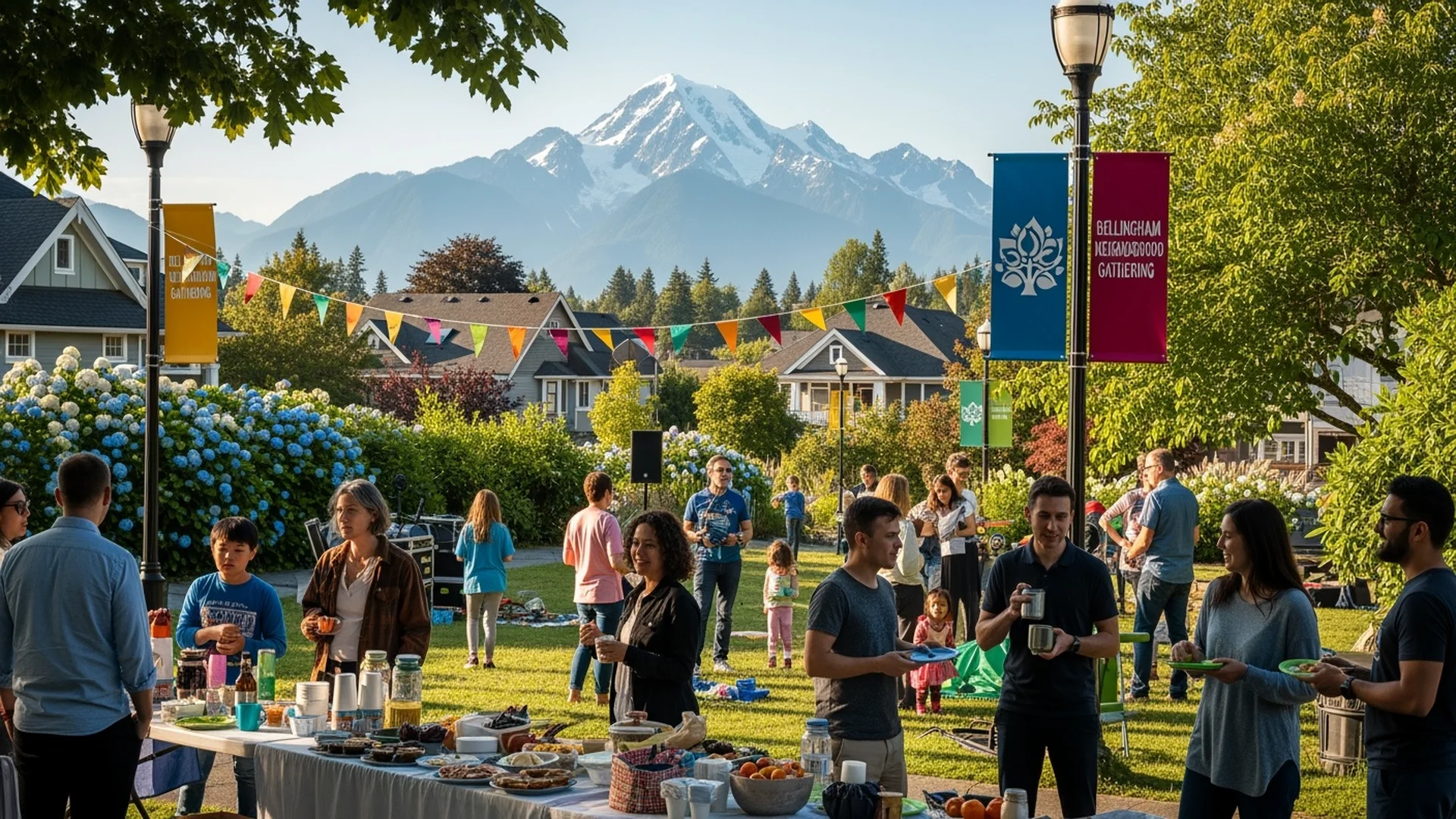
Bellingham is getting a people-powered mobile network. Here's what a community mobile network is, how it works, and why it could change how you pay for phone service.
The wireless industry has been running the same playbook for about 30 years. A handful of enormous companies build towers, lay cable, negotiate spectrum licenses, and then charge you $60 to $80 a month for the privilege of accessing what they’ve built. You pay. They profit. That’s the whole relationship.
Three companies control the vast majority of wireless service in the United States. They set the prices. They decide where to build. They choose which communities get great coverage and which ones get ignored. If you’re unhappy, your options are to switch to one of the other two or find a smaller carrier that’s just renting space on those same three networks anyway.
For decades, nobody seriously questioned whether this was the only way to build a mobile network. But a different model is starting to emerge, one where the network is actually built and powered by the people who use it. It’s called a community mobile network. And Bellingham, Washington is one of the first cities in the country where you can see it happening in real time.
This isn’t theoretical. It’s not a concept paper or a pitch deck. Infrastructure is going up. Coverage zones are activating. Real people in Bellingham are signing up as both subscribers and network participants. If you live in the area, this is going to affect how you think about your phone bill.
What Is a Community Mobile Network?
Let’s start with the basics, and let’s keep this simple. No jargon, no acronyms, just a plain explanation you could give to a friend over coffee.
The Traditional Model
Here’s how your phone service has always worked. A corporation, let’s say T-Mobile, builds a network of cell towers across the country. They spend billions of dollars doing this. They hire thousands of employees. They negotiate with the government for radio spectrum. They maintain the equipment.
Then they charge you a monthly fee to connect to those towers. That fee pays for the infrastructure, the employees, the spectrum licenses, the retail stores, the executive salaries, the shareholder dividends, and the marketing budget. You’re paying for all of it, every single month.
You have no say in how the network operates. You can’t influence where new towers get built. You can’t participate in the economics of the network. You’re a customer and nothing more. Money flows in one direction: from your bank account to their quarterly earnings report.
This model works, obviously. We all have phone service. But it’s also expensive, extractive, and concentrated. A few companies control something that nearly every person on the planet relies on, and the people who actually use the network have zero ownership over it.
The Community Model
A community mobile network flips this around. Instead of one company building and owning everything from the top down, the infrastructure is distributed among the people who live in the community.
Think of it like this. In the traditional model, one company builds a few massive towers and charges everyone to connect. In the community model, many smaller devices are hosted by regular people and local businesses, creating a network that’s denser, more resilient, and significantly cheaper to operate.
The people who host equipment earn from the network. The people who subscribe pay lower prices because the infrastructure costs are distributed instead of concentrated. And the whole system is designed so that value flows back to the community rather than being extracted from it.
If this sounds vaguely familiar, it should. Community owned utilities have existed for over a century. Electric cooperatives, credit unions, community water systems. These are all examples of essential services that work better when the people who use them have a stake in how they operate. A community mobile network applies the same principle to wireless service.
Why Now?
Two things have changed that make community networks possible today.
First, the hardware got smaller and cheaper. You don’t need a 200 foot steel tower with $500,000 worth of equipment to provide mobile coverage anymore. Modern small cell technology can deliver strong signal from a device the size of a router that costs a fraction of what traditional infrastructure requires.
Second, the economics finally work. Multi carrier partnerships mean that a community network doesn’t have to build everything from scratch. It can plug into existing national infrastructure for wide coverage while using local nodes to enhance density, lower costs, and give community members a way to participate.
The technology caught up with the idea. And now cities like Bellingham are proving it works.
How It Actually Works
Alright, so the concept makes sense. But how does a community mobile network actually function day to day? What are these devices? Where do they go? How does your phone connect to them?
AirNodes: The Building Blocks
The core hardware in a community mobile network is called an AirNode. Don’t overthink the name. It’s basically a small networking device that extends wireless coverage in its area.
Picture a Wi-Fi router, but instead of just covering your house, it’s providing cellular grade connectivity to the surrounding neighborhood. That’s essentially what an AirNode does. It’s a compact piece of equipment that can be installed in a home, a business, or a community space. It connects to the broader network infrastructure and helps provide coverage to nearby subscribers.
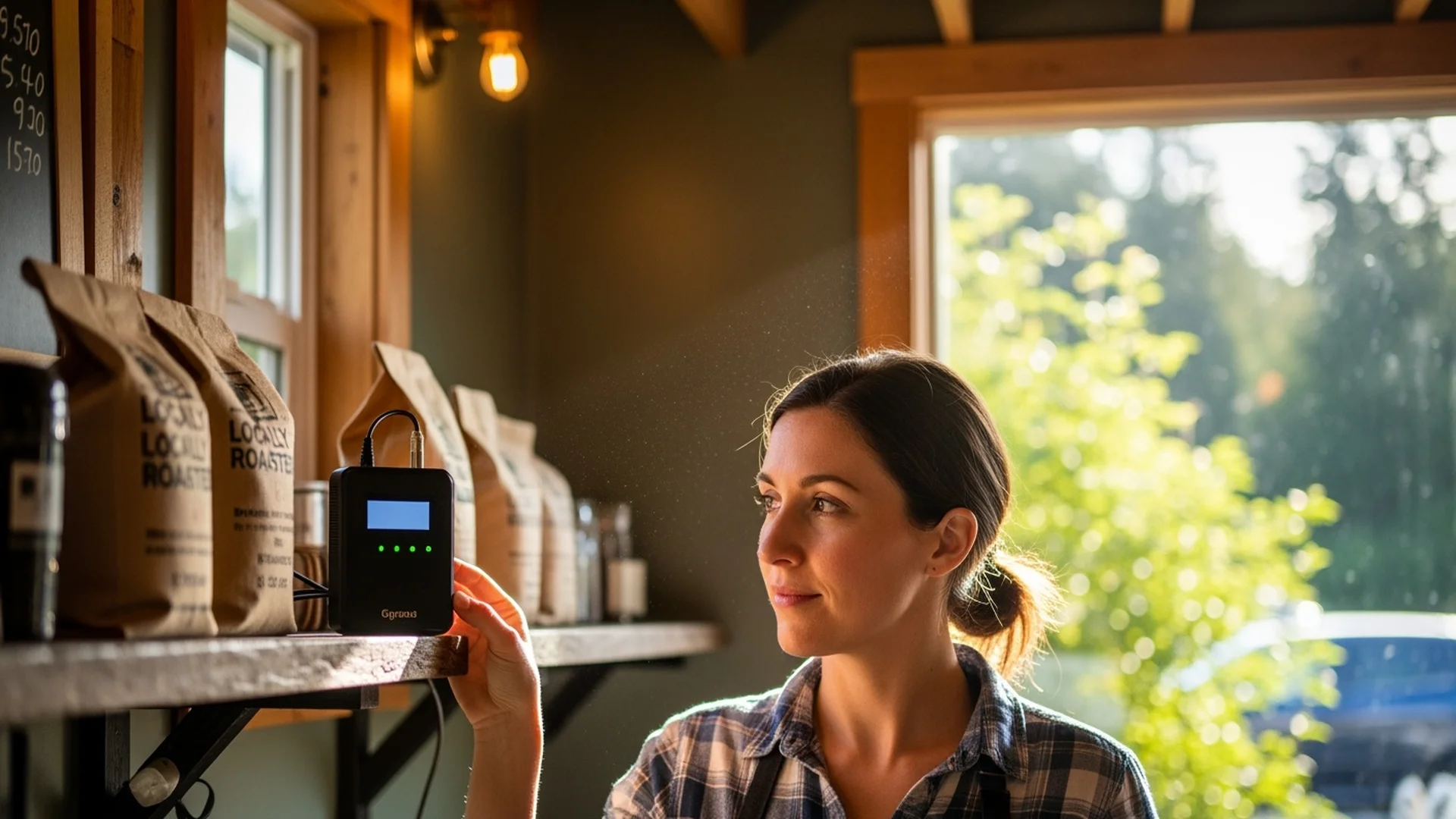
AirNodes are nothing like traditional cell towers. There’s no construction crew. No environmental impact review. No months long permitting process. No 150 foot steel structure going up in your neighborhood. An AirNode is a small device that sits on a shelf, mounts on a wall, or sits by a window. Most people wouldn’t even notice one.
Who Hosts Them?
Regular people. Local businesses. Community organizations. Anyone who has space and an internet connection can potentially host an AirNode.
Here’s the key part: hosting isn’t charity. The people who host AirNodes earn from the network. They’re providing a real service, contributing infrastructure that makes the network work, and they’re compensated for it. This is what makes a community network fundamentally different from a traditional carrier. The people who power the network share in its economics.
In Bellingham, this means your neighbor could be hosting a device that helps provide your phone service. The coffee shop downtown could be running one. A local business on Railroad Avenue could have one in the back room. The network grows organically because real people in real locations choose to participate.
How Your Phone Connects
From your perspective as a subscriber, nothing changes about how you use your phone. You don’t need a special device. You don’t need to configure anything. You don’t need to think about AirNodes at all.
Your phone connects to whatever has the strongest signal, whether that’s a traditional cell tower, a partner network, or a local AirNode. World Mobile partners with four major US network providers to deliver 99% nationwide coverage. The community infrastructure in Bellingham supplements and strengthens that coverage locally.
Think of it like mesh Wi-Fi for your house, but scaled up to cover a city. Each node in the mesh adds capacity and improves coverage. The more nodes there are, the better the network gets for everyone. Except instead of one company owning all the nodes, the community owns them.
Why Bellingham?
Out of all the cities in the country, why is Bellingham one of the first places getting a community mobile network? Turns out, it’s not random. Several things make this city a natural fit.
The Coverage Zones
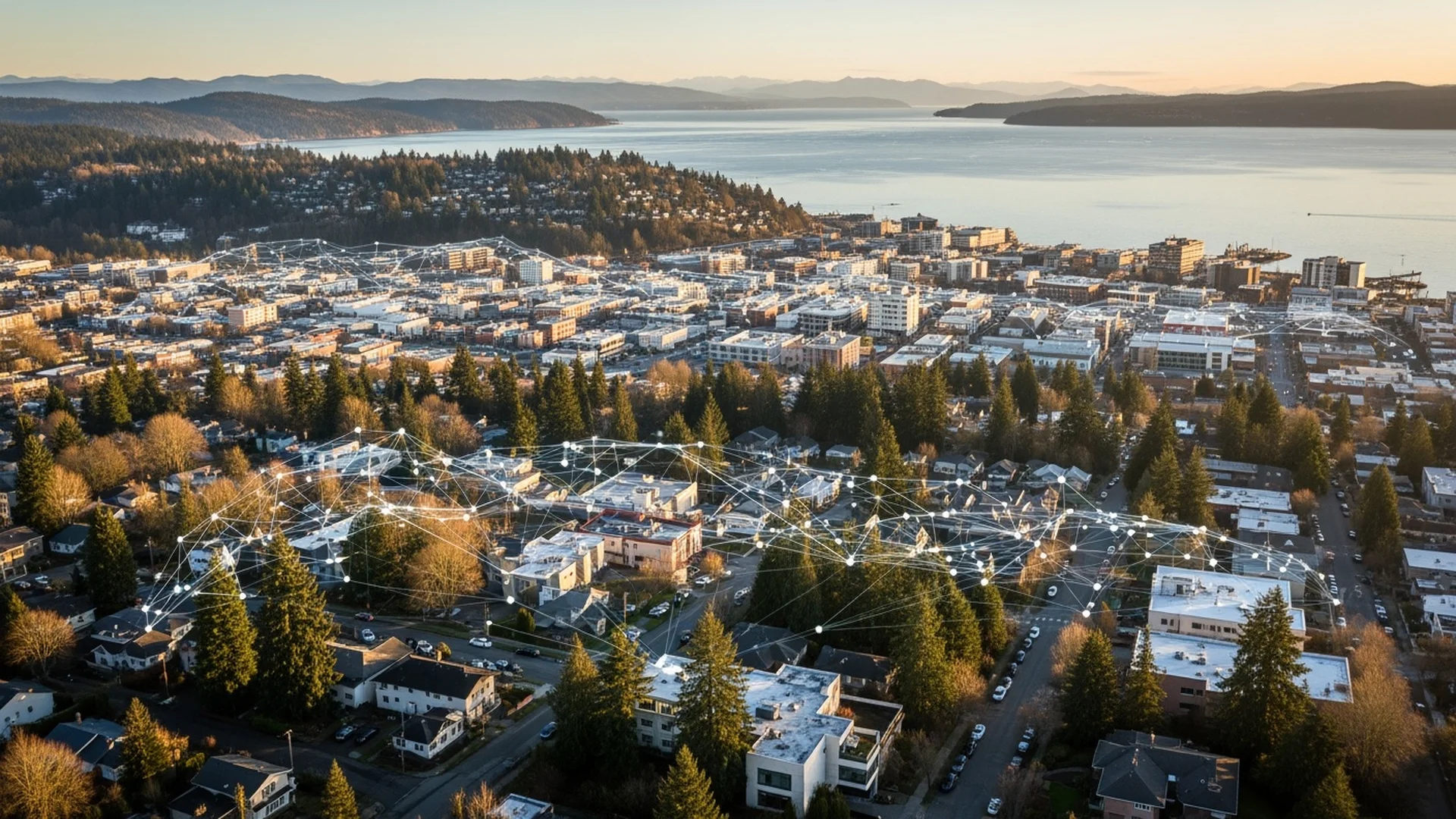
World Mobile has designated seven hexagonal coverage zones (called hexes) covering Bellingham and surrounding areas. These zones map out where community infrastructure is being deployed and where local network participants are most needed.
Seven hexes might sound abstract, but in practical terms it means the entire Bellingham metro area, including residential neighborhoods, the university district, downtown, and surrounding communities, is within the build out plan. The target is roughly 7,000 subscribers across these zones, which is enough to sustain a vibrant local network.
University Town Energy
Bellingham is home to Western Washington University and a large student population that’s tech savvy, budget conscious, and generally open to new approaches. Students are some of the first people to try alternatives to the status quo, especially when those alternatives save them money.
A $15 or $25 per month phone plan resonates with someone who’s stretching a student budget. And the idea of a network that’s built by the community rather than a distant corporation aligns with values that a lot of students and young professionals in the area already hold.
Pacific Northwest Values
There’s a reason community land trusts, food cooperatives, and local businesses thrive in the Pacific Northwest. The culture here leans toward community ownership, environmental consciousness, and doing things differently when the mainstream option doesn’t serve people well.
A community mobile network fits that ethos perfectly. It’s locally powered. It distributes value instead of concentrating it. It gives people agency over a service they use every day. If any region in the US was going to embrace this model early, the Pacific Northwest makes complete sense.
Local Business Ecosystem
Bellingham has a dense network of small businesses, independent shops, coffee roasters, breweries, outdoor gear stores, and creative enterprises. These businesses often share a common mindset: support local, build community, keep value circulating in the area.
A community mobile network gives these businesses a way to participate directly. A coffee shop that hosts an AirNode isn’t just providing phone service to its neighborhood. It’s strengthening a locally powered network and earning from the infrastructure it’s helping to build. That’s a very different value proposition than paying a monthly cell bill to a corporation headquartered across the country.
What This Means for Your Phone Bill
Let’s get practical. If you’re a Bellingham resident reading this, you probably want to know what this actually costs and whether it’s worth switching.
The Plans
World Mobile offers four plans, all available in the Bellingham area right now:
| Plan | High Speed Data | Monthly Price | Key Features |
|---|---|---|---|
| Starter | 2 GB | $15/mo | Unlimited calls and texts, VPN, hotspot |
| Standard | 8 GB | $25/mo | Unlimited calls and texts, VPN, hotspot |
| Unlimited | 25 GB | $40/mo | Identity protection, 60 country international calls |
| Unlimited+ | 50 GB | $55/mo | $1M identity insurance, SIM swap protection |
Every plan includes unlimited calls and texts, a built in VPN at no extra charge, mobile hotspot, and eSIM activation. No contracts. No hidden fees. No “regulatory recovery” surcharges or “line access” fees that inflate your bill.
How This Compares to What You’re Paying Now
If you’re on one of the big three carriers, you’re probably paying somewhere between $50 and $85 per month for a single line. Here’s what the savings look like over a year:
| Your Current Plan | Monthly | Annual | Switch to World Mobile Standard ($25/mo) | Annual Savings |
|---|---|---|---|---|
| T-Mobile Essentials | ~$50/mo | ~$600/yr | $25/mo / $300/yr | ~$300 |
| Verizon Welcome Unlimited | ~$65/mo | ~$780/yr | $25/mo / $300/yr | ~$480 |
| AT&T Unlimited Starter | ~$65/mo | ~$780/yr | $25/mo / $300/yr | ~$480 |
For a family of four, those savings multiply. Four lines on the World Mobile Standard plan with the 30% family discount comes to $70 per month total. Compare that to $140 to $160 on a major carrier. That’s $840 to $1,080 per year back in your family’s pocket.
Earning Back Through Referrals
Here’s where the community model adds another layer. When you refer friends and family to the network, you earn cash rewards. Not points. Not credits toward your next phone purchase. Actual money.
The Refer & Earn program pays you at signup, at six months, and at twelve months for each person you bring in. Depending on the plan they choose, that can be anywhere from $8 to $45 per referral. Refer five friends to the Standard plan on annual billing, and you’ve earned $90. That’s almost four months of your own phone bill paid for by helping other people save money on theirs.
In a community network, referring someone isn’t just a transaction. You’re literally growing the network that serves your area. More subscribers means more investment in local infrastructure, which means better service for everyone.
No Contracts, eSIM Activation
This is worth emphasizing because it removes all the risk from trying something new. There are no contracts of any kind. You can cancel at any time, for any reason, with no termination fees. If you try it for a month and decide it’s not for you, you walk away with zero consequences.
Activation happens through eSIM, which means you scan a QR code and your phone connects to the network in minutes. No store visit. No physical SIM card in the mail. No waiting. If your phone was made after 2019, it almost certainly supports eSIM.
How Community Networks Are Different from MVNOs
You might be thinking: this sounds like one of those cheaper carriers that just resells service from the big companies. But there’s a significant difference, and it matters.
What an MVNO Is
An MVNO (Mobile Virtual Network Operator) is a company that doesn’t own any network infrastructure. Instead, it buys wholesale access to someone else’s network and resells it at a markup. Companies like Mint Mobile, Cricket, Boost, and Visible are all MVNOs.
MVNOs can offer lower prices than the big carriers because they don’t have the overhead of building and maintaining their own infrastructure. But the relationship is purely transactional. You pay them. They pay the carrier. The carrier provides the service. Nothing about the model involves the community or gives subscribers any stake in the network.
MVNOs are also entirely dependent on their wholesale agreements. If T-Mobile decides to raise wholesale rates, every MVNO on T-Mobile’s network either eats the cost or passes it to you. The MVNO has no leverage because it owns nothing.
What a Community Network Does Differently
A community mobile network like World Mobile does partner with major carriers for national coverage. That part is similar. But there are three critical differences.
First, it builds real infrastructure. AirNodes deployed in Bellingham are actual network equipment providing actual coverage. This isn’t just reselling someone else’s service. The community network has its own physical layer that supplements and enhances coverage in the areas where it operates.
Second, people can participate in the economics. When you host an AirNode, you’re not just a customer paying a bill. You’re a network participant earning from the infrastructure you’re providing. Value flows both ways instead of one.
Third, the incentives are aligned. A traditional carrier profits when you overpay for data you don’t use. An MVNO profits on the margin between wholesale and retail. A community network profits when its participants are engaged and the network grows, which means keeping prices fair and service quality high is in everyone’s interest.
The difference, put simply: MVNOs just resell. Community networks actually build something.
What’s Happening in Bellingham Right Now
This isn’t a future tense story. Things are actively moving in the Bellingham area.
Network Infrastructure Going Up
AirNodes are being deployed across the seven designated coverage zones. Local homes and businesses are starting to host equipment, extending coverage into neighborhoods and commercial districts. Each new node strengthens the network for everyone in the area.
Coverage Zones Activating
The hexagonal coverage zones aren’t theoretical boundaries on a map. They represent real areas where the community network is coming online. As more AirNodes go live in each zone, coverage density increases and the network becomes more robust.
Local People Signing Up
Both sides of the community network are growing simultaneously. Subscribers are joining for the lower prices, the built in VPN, and the no contract flexibility. Hosts are joining to participate in the network and earn from providing infrastructure. And the referral program creates a natural growth loop where every satisfied subscriber has a financial incentive to bring in the next one.
HexyMobile operates as the local Network Builder for the Bellingham area. That means there’s a local team invested in the quality of service in this specific community. When you have a question or need help, you’re not calling a 1 800 number staffed by someone who’s never heard of Whatcom County. You’re reaching out to people who live here and care about making this work.
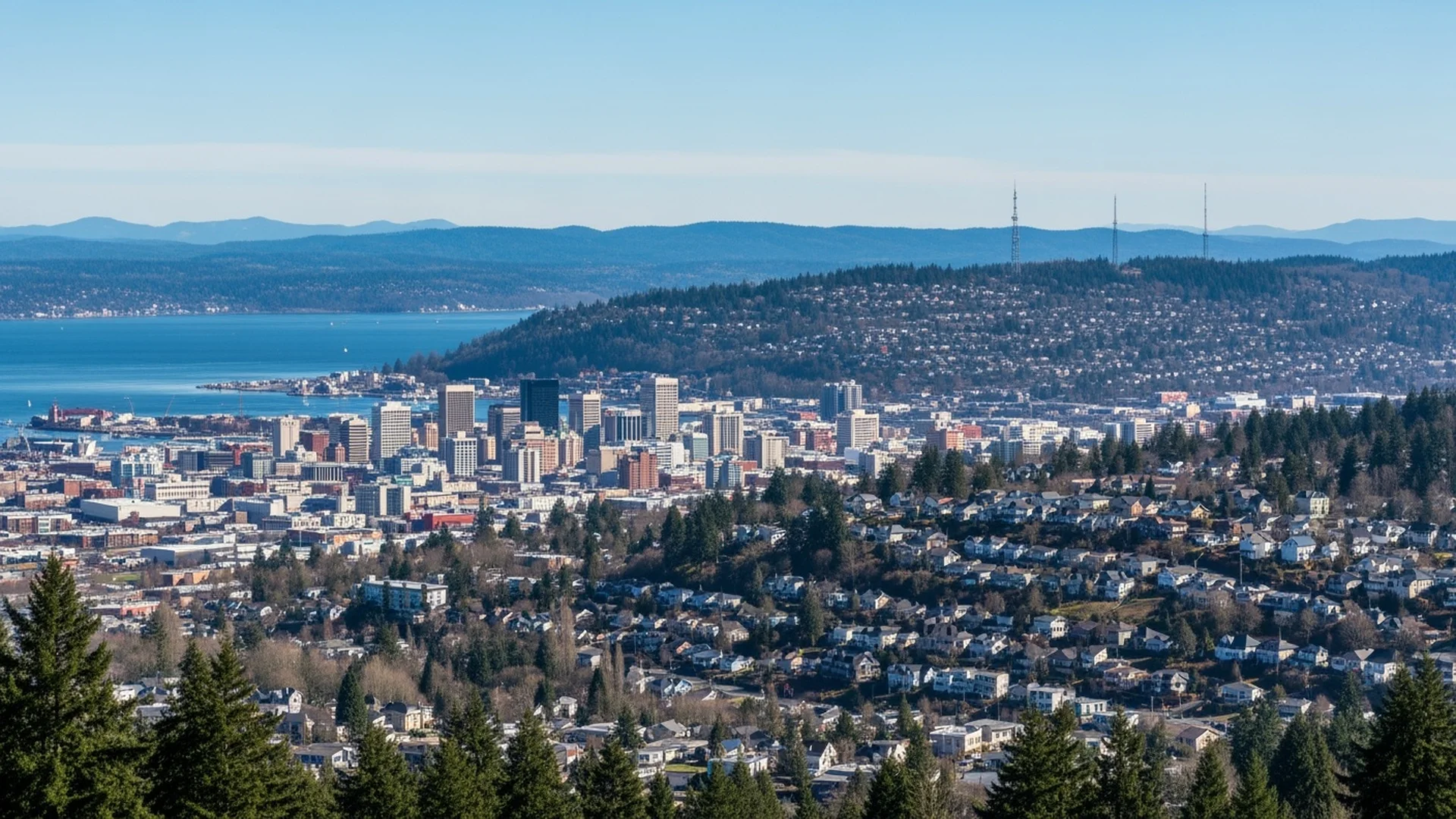
The Old Model vs. The Community Model
Here’s a side by side comparison so you can see the differences clearly:
| Traditional Carrier | Community Mobile Network | |
|---|---|---|
| Who builds the network | One corporation | Local people and businesses |
| Who profits | Shareholders | Community participants |
| Infrastructure | Massive towers, centralized | Small nodes, distributed |
| Your role | Customer (pay and use) | Participant (can host, earn, and refer) |
| Pricing | $50 to $85/mo for one line | $15 to $55/mo with more included |
| Contracts | Often 12 to 24 months | None, ever |
| Coverage decisions | Made by corporate HQ | Influenced by where community members deploy |
| Local investment | Minimal (your money leaves town) | Direct (your money circulates locally) |
| Data privacy | Varies, often monetized | Built in VPN included on every plan |
| When you refer someone | Nothing happens for you | You earn cash at multiple milestones |
The traditional model treats you as a revenue source. The community model treats you as a network participant. That’s not marketing spin. It’s a structural difference in how the economics work.
What This Looks Like in Five Years
Community mobile networks are early. Bellingham is one of the first US cities to see this model in action, and the infrastructure is still being built out. But the trajectory is clear.
As more AirNodes go live, coverage gets denser. As more subscribers join, the economics improve. As the referral program brings in more people, the growth accelerates. Each new participant makes the network more valuable for everyone already in it.
In a few years, the idea of paying $70 a month to a corporation that gives you nothing back will seem as outdated as renting a movie from Blockbuster. Not because the technology changed (the phone calls and texts work exactly the same), but because the model changed. People will expect to participate in the networks they power rather than simply paying for access.
Bellingham is ahead of the curve on this. If you’re here now, you get to be part of the early wave, when the plans are cheap, the referral rewards are high, and the community is still small enough that every new member makes a visible difference.
Things You Might Be Wondering
Before we get to the formal FAQ, let’s address a few things that usually come up when people first hear about community networks.
“Is this too good to be true?” It’s not. The math works because distributed infrastructure is genuinely cheaper than centralized infrastructure. When you eliminate massive tower construction, reduce retail overhead, and share the costs of network deployment across a community, the per subscriber cost drops significantly. The savings get passed to you.
“Do I need to host an AirNode to subscribe?” No. You can be a subscriber without hosting anything. The plans, prices, and coverage are the same whether or not you participate as a host. Hosting is an optional way to earn from the network and contribute to local coverage.
“Will this actually work in my neighborhood?” World Mobile partners with four major US network providers for 99% nationwide coverage. So even before any AirNodes are deployed in your specific block, you have full service. The community infrastructure supplements that coverage and makes it better over time.
“I’m not tech savvy. Can I still switch?” Absolutely. From the subscriber side, switching to World Mobile is identical to switching to any other carrier. You sign up online, scan a QR code, and your phone connects. If you can download an app, you can switch carriers.
Frequently Asked Questions
What exactly is a community mobile network?
A community mobile network is a wireless network where the infrastructure is partially built and operated by local people and businesses rather than a single corporation. Small networking devices called AirNodes are hosted by community members, extending coverage across the area. Subscribers get lower prices because infrastructure costs are distributed. Hosts earn from the network because they’re providing a real service. The whole system is designed so that value stays in the community rather than being extracted by a distant corporation.
How is this different from Mint Mobile, Cricket, or other budget carriers?
Budget carriers like Mint Mobile and Cricket are MVNOs, meaning they own zero network infrastructure. They buy wholesale access from a big carrier and resell it to you. A community network like World Mobile also partners with major carriers for national coverage, but it additionally builds real local infrastructure through AirNodes hosted by community members. The key difference is participation: on an MVNO, you’re just a customer. On a community network, you can host equipment, earn from the network, and refer others for cash rewards. It’s a fundamentally different economic structure.
Do I need to host an AirNode to get phone service?
No. Hosting an AirNode is completely optional. You can sign up as a regular subscriber and get full service at the listed plan prices without hosting anything. The coverage, features, and pricing are the same for all subscribers regardless of whether they participate as hosts. Hosting is available for people who want to contribute to the network and earn from it.
What does it cost and are there contracts?
Plans start at $15 per month for the Starter (2 GB of high speed data, unlimited calls and texts, VPN, hotspot). The Standard plan is $25 per month with 8 GB. The Unlimited is $40 per month with 25 GB. There are no contracts whatsoever. Every plan is month to month, and you can cancel at any time with no penalties or termination fees. New subscribers get 50% off their first month.
Will I get reliable coverage in Bellingham?
Yes. World Mobile partners with four major US network providers to deliver 99% nationwide coverage. In Bellingham and throughout Whatcom County, your phone connects to the same cell towers used by T-Mobile, AT&T, and Verizon subscribers. The community AirNode infrastructure being deployed in the area supplements this with additional local coverage. You get reliable service from day one, and it continues improving as more local nodes come online.
How do AirNodes work and what do they look like?
An AirNode is a compact networking device, roughly the size of a home router. It can be placed on a shelf, mounted on a wall, or positioned near a window. It connects to the internet and extends wireless coverage to the surrounding area. There’s no construction, no tower, and no complex installation. Most people wouldn’t notice an AirNode unless someone pointed it out to them. Hosts need an internet connection and a suitable location, and the device handles the rest.
Can I earn money from this network?
There are two ways to earn. First, the Refer & Earn program pays you cash rewards every time someone you refer signs up and stays connected. Rewards range from $8 to $45 per referral depending on the plan they choose and their billing cycle. Second, hosting an AirNode lets you earn from providing infrastructure to the network. Both options are available to anyone in the Bellingham area.
What if the community network doesn't work out? Am I stuck?
Not at all. There are zero contracts and zero cancellation fees. If you try World Mobile for a month and decide it’s not for you, you cancel and that’s it. You can port your phone number to any other carrier at any time. Since your phone connects to major carrier networks (not only AirNodes), your service isn’t dependent on the community infrastructure alone. Even in the unlikely event that every AirNode in Bellingham went offline, your phone would still work on the partner networks.
Is my data private on a community network?
Every World Mobile plan includes a built in VPN at no extra charge. This encrypts your internet traffic so that nobody, including your internet provider, public Wi-Fi operators, or anyone else, can see what you’re doing online. Most standalone VPN services cost $5 to $12 per month. This one is included with every plan, including the $15 Starter. AirNode hosts cannot see or access any subscriber data passing through their equipment. The network is designed with privacy as a baseline, not an add on.
This Is Bellingham’s Moment
Here’s the thing about community networks. They don’t get built by press releases or corporate announcements. They get built by regular people deciding to participate. Someone hosts an AirNode. Someone signs up for a plan. Someone tells a friend about it. Each action is small on its own, but together they create something that none of the big carriers can replicate: a network that’s genuinely powered by the people who use it.
Bellingham is early to this. The infrastructure is going up now. The coverage zones are activating now. The community is forming now. If you’re reading this from somewhere in Whatcom County, you’re in a position to be part of something that most of the country doesn’t have access to yet.
You don’t have to host an AirNode. You don’t have to understand how the network architecture works. You don’t even have to care about the philosophical difference between community infrastructure and corporate infrastructure. If all you want is a reliable phone plan that costs $15 to $25 per month, includes a free VPN, requires no contract, and activates in minutes through eSIM, that’s reason enough.
But if you do care about where your money goes, how your community operates, and whether the services you rely on every day actually serve the people who use them, then what’s happening in Bellingham right now is worth paying attention to.
The big carriers aren’t going to change. They’ve had 30 years to lower prices, share value with customers, and invest in local communities. They haven’t, because the model doesn’t incentivize it. The only way things change is if someone builds something different.
That’s what’s happening here. And you can be part of it.
Ready to check it out? Visit World Mobile to learn more about the network, explore the plans, or sign up. If you’re in the Bellingham area, check out HexyMobile for local coverage details, plan comparisons, and help getting started.
Ready to switch? Plans start at $15/mo.
Sign Up at HexyMobileStay in the Loop
Phone plan tips, coverage updates, and deals for the PNW. No spam.